The worst day in 19 months. What it doesn’t mean.
CAPITALS INSIDERS Markets, made simple — every weekday morning · Friday, November 6, 2026 | |
Good morning. Yesterday was the worst day for American stocks since the tariff shock of April 2025. The S&P 500 fell 4.4%, the Nasdaq entered a correction, and roughly $2 trillion of market value disappeared in a single session. If you looked at your account last night, this issue is for you: what happened, why, and what history says about days like this. | |
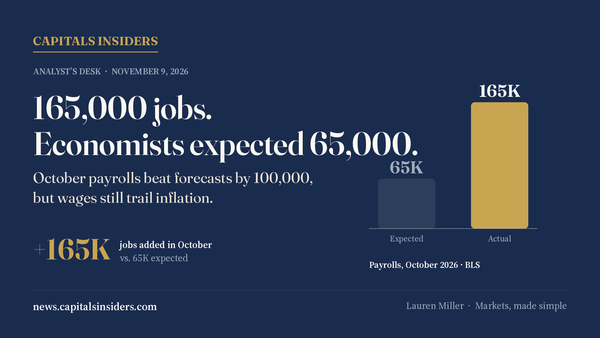
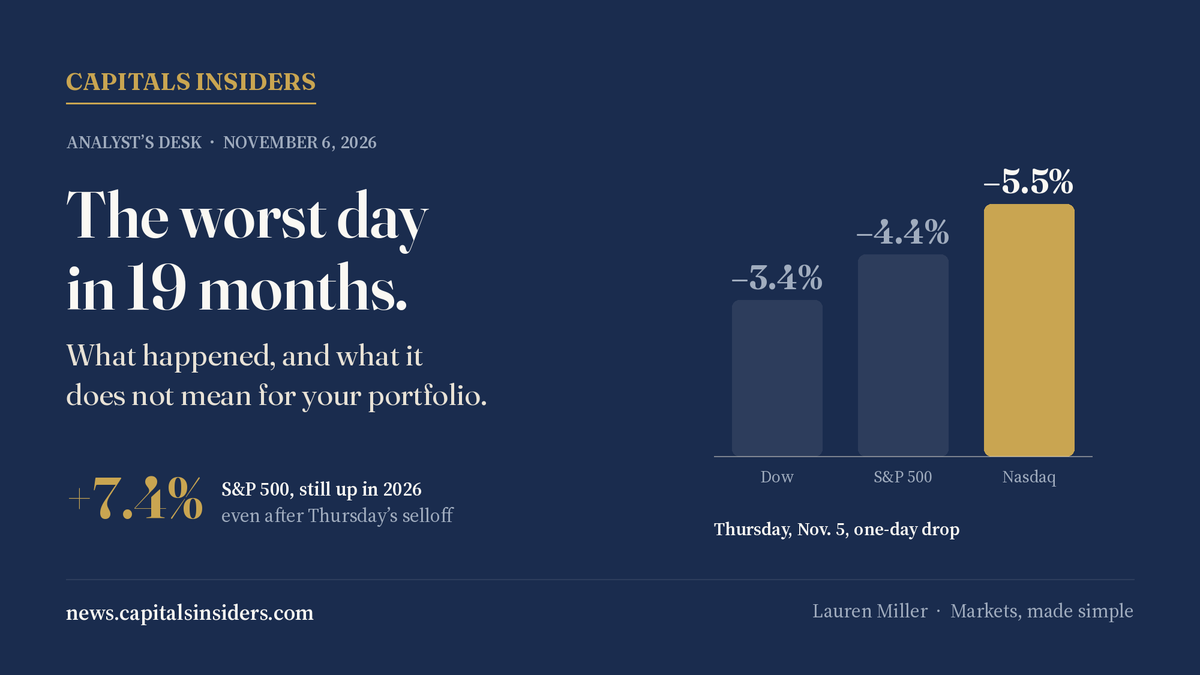
🔔 Opening Bell Thursday: The S&P 500 fell –4.4% to 7,353.73, the Dow –3.4% (–1,833 points) to 51,523.06, the Nasdaq –5.5% to 24,315.00 and the Russell 2000 –4.4%. The VIX, Wall Street's fear gauge, jumped more than 65% at one point, its biggest one-day leap in over two years. This morning: Nasdaq 100 futures rebounded more than 1% as chip stocks bounced, while Dow futures fell about –0.9%. The October jobs report is due at 8:30 a.m.; economists expect about 65,000 new jobs and unemployment at 4.2%. Bonds and oil: Bonds rallied as stocks fell: the 10-year Treasury yield dropped to about 4.84%. U.S. crude traded near $91 a barrel. | |
📊 Analyst's Desk The worst day in 19 months. What happened, and what it does not mean. 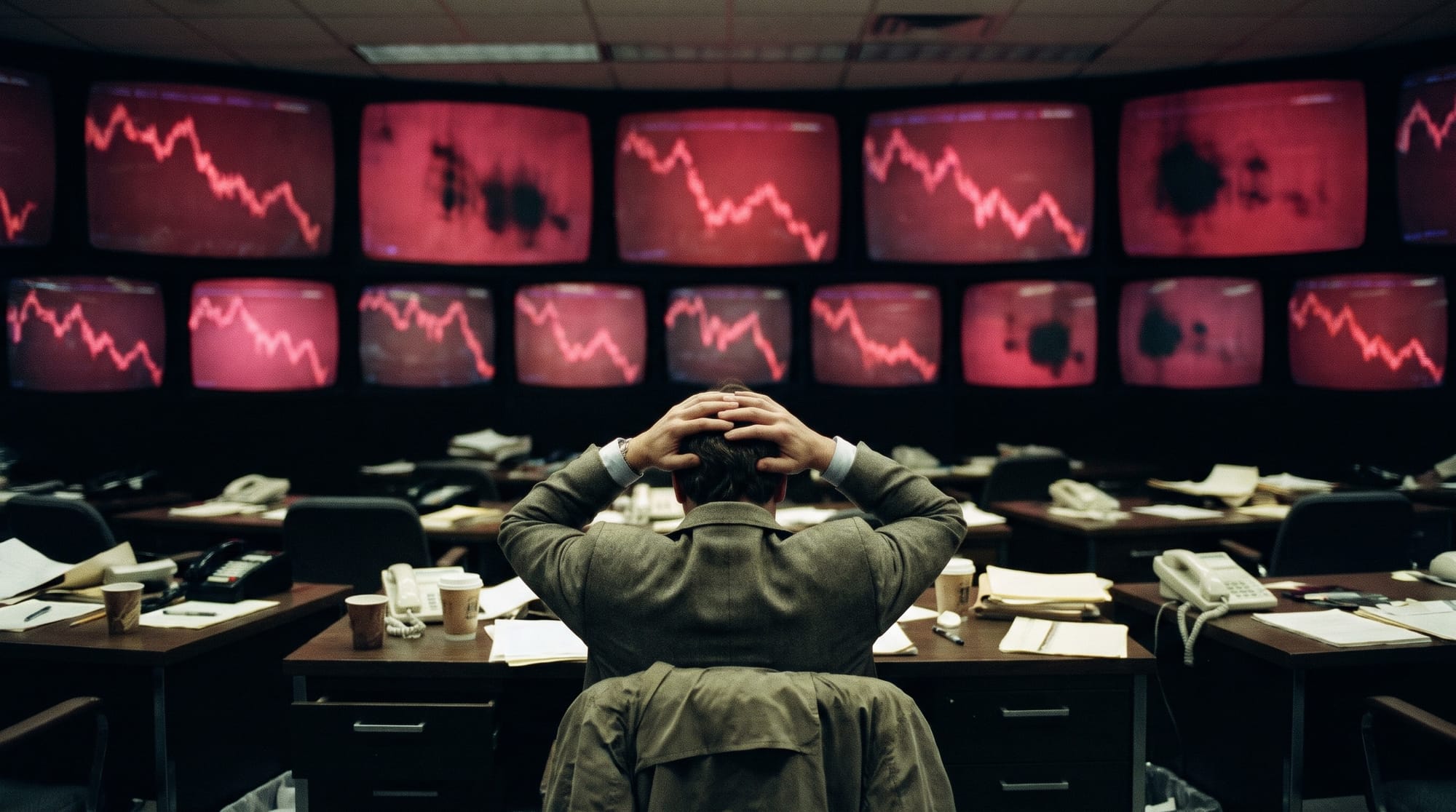 Start with where the damage was. It was concentrated in the companies tied to building AI data centers. The Philadelphia Semiconductor Index fell 12.3% in one day. AMD fell about 15%, Micron about 12% and Nvidia about 6%. Palantir, CrowdStrike, SpaceX and Tesla each lost more than 9% at some point. The Nasdaq 100 dropped 6.4%, and large technology stocks had their worst day since the pandemic crash of 2020. There were three forces at work. First, politics: after Democrats won both houses of Congress, investors began pricing in tougher rules for data centers and a harder path for a SpaceX-Tesla merger. Second, positioning: Nomura strategist Charlie McElligott said hedge funds were locking in this year's gains, calling it "shooting the generals," the market leaders that had risen most. Third, momentum: once the Nasdaq broke below its 200-day average, a level many traders watch, automated selling added fuel.
WHAT A CORRECTION IS A correction is a decline of 10% or more from a recent high; a bear market is 20% or more. Corrections are common. They tend to feel sudden because they often come after long stretches of calm, and they usually start in the stocks that rose the most. Now the context. Even after Thursday, the S&P 500 is up 7.4% for the year and the Russell 2000 of smaller companies is up 10%. The last comparable day, in April 2025, was followed by a recovery: the S&P 500 returned to record highs within months. Bonds also did what they are supposed to do, rising in value as stocks fell. And this morning, futures for the same chip-heavy index that led the selloff were rebounding. “I think the market can sometimes be a little bit short-sighted.” Lisa Su, AMD chief executive, on Thursday Here is what the numbers actually say. One terrible day does not tell you where markets go next, and the fears behind it, about AI spending and regulation, are real and unresolved. But the decline was led by the most expensive corner of the market, much of the rest held up far better, and history shows that sharp selloffs and sharp rebounds tend to arrive close together. For most long-term investors, days like this test the plan more than they change it. | |
💵 Income Desk: Why a cash cushion matters on days like this For retirees who draw income from their savings, the real risk of a selloff is being forced to sell stocks while they are down to pay the bills. 10-year Treasury yield, Friday ~4.84% bond prices rose as stocks fell S&P 500, still up in 2026 +7.4% even after Thursday A common approach is to keep some months or years of planned withdrawals in cash, CDs, Treasury bills or short-term bonds, so that spending can continue without selling stocks after a drop. With short-term Treasuries and top CDs still paying well above 4%, that cushion currently earns a real return while it waits. How large it should be depends on your other income, such as Social Security or a pension, and on how much volatility you can live with; a financial planner can help size it. | |
🧭 Market Sentiment & Calendar VIX at Thursday's peak 27.45 biggest jump in over two years S&P 500, this week –3.0% through Thursday Fear rose sharply, but it remains well below the levels of past crises. Today, 8:30 a.m. October jobs report. Wed, Dec. 9 Next Fed decision. Thu, Dec. 31 Deadline for tax-loss sales and required minimum distributions. | |
⚡ Quick Takes Bitcoin. Bitcoin fell about 4.5% to near $76,000, moving with technology stocks rather than against them. | |
📜 Wisdom of the Street “The stock market is a device for transferring money from the impatient to the patient.” — Warren Buffett Thursday tested patience more than any day in a year and a half. | |
Have a good weekend. — Lauren Miller, Capitals Insiders |