Apple’s record quarter has a memory problem
CAPITALS INSIDERS Markets, made simple — every weekday morning · Tuesday, November 3, 2026 | |
Good morning. It is Election Day, and markets are waiting along with everyone else. In the meantime, the last of the giant technology companies reported last night. Apple sold more iPhones than expected, then warned that the memory chip shortage we wrote about on Friday will cut into its profits. Here is what that tells us. | |
🔔 Opening Bell Stocks: The S&P 500 fell –0.5% on Monday to 7,541.40 and the Nasdaq –1.1% to 25,164.32, while the Dow rose +0.4% to 51,983.98. The Nasdaq 100 closed in correction territory, 10% below its high. Most stocks still rose. Deals: Marvell agreed to buy Lumentum in a $115 billion all-stock deal; Marvell fell 12.7% and Lumentum 18.6%. Oracle dropped 8.8% on plans to raise $20 billion in debt and stock. Oil and data: Brent crude fell 8% on Monday after both governments cited progress in talks between the U.S. and Iran. A gauge of factory activity rose to 55.5 in October. The 10-year Treasury yield is near 4.9%. | |
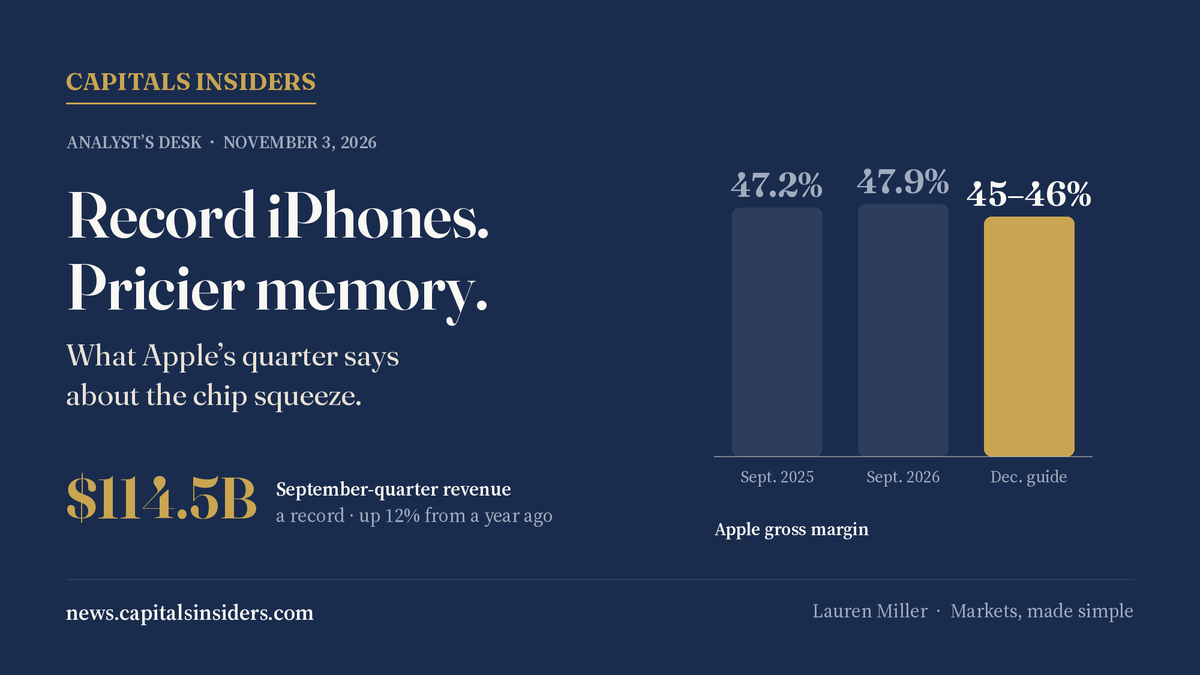
📊 Analyst's Desk Apple had a record quarter. Memory chips will take some of it back.  Start with the results, which were strong. Revenue rose 12% to $114.5 billion, a record for the September quarter, and earnings rose 14% to $2.10 a share. The iPhone brought in $57.6 billion, up 17.5%, and Mac sales rose 24%. Sales in Greater China climbed 21%, though some analysts had expected more. Services, from the App Store to iCloud, reached a record $31.6 billion. It was Apple's first report under chief executive John Ternus, who succeeded Tim Cook on September 1. The problem is the next quarter. Apple expects the holiday quarter to be the best for revenue in its history, with sales up 7% to 10%. But it forecast a gross margin, the share of each sales dollar left after the cost of making its products, of 45% to 46%, down from 47.9% last quarter. The main reason is memory. As we explained on Friday, AI data centers are absorbing so much of the world's memory chip supply that prices for the chips inside phones and computers have soared, and Apple has raised some prices without fully covering the cost. The shares fell about 2.8% after hours.
WHY TWO POINTS OF MARGIN MATTER Apple’s holiday-quarter sales are expected to be well above $100 billion, so each percentage point of gross margin is worth more than $1 billion of profit. A drop of two points is a meaningful sum, even for Apple, and it comes from a cost the company does not control. There is a contrast worth noting. Last week Amazon, Meta and Alphabet showed how much cash they are spending on AI data centers, and Meta began selling stock to help pay for it. Apple has largely stayed out of that race. In the September quarter alone, it returned $28 billion to shareholders, $24 billion in buybacks and $3.9 billion in dividends. Its AI risk is different: it pays more for the chips its products need, and it must persuade customers that new AI features are worth an upgrade. Here is what the numbers actually say. Apple's business is growing again after a slow stretch, and it remains one of the few giants handing large amounts of cash back to shareholders. The memory squeeze is real but has a likely end: industry executives expect prices to peak around the middle of next year. Until then, every company that builds devices, not just Apple, will feel it. | |
💵 Income Desk: Apple's dividend, and the date that decides who gets it Apple declared its regular quarterly dividend last night. Quarterly dividend per share $0.27 payable November 16 Record date Nov. 12 own shares before this day To receive a dividend, you must be a shareholder of record on the record date. Since U.S. stock trades began settling in one business day in 2024, the ex-dividend date usually falls on the record date itself, so shares bought on or after November 12 generally will not receive this payment. At roughly $1.08 a year on a share price near $330, Apple's dividend yield is only about 0.3%; the company returns far more through buybacks, which raise each remaining share's slice of profits but pay nothing directly. Dividends held in a taxable account are generally taxed in the year they are paid, at lower qualified rates if holding-period rules are met. | |
🧭 Market Sentiment & Calendar VIX volatility index ~21 Tuesday morning Nasdaq 100 Correction 10% below its high Options traders are pricing an S&P 500 move of about 0.9% today and about 1.9% through Friday's jobs report. Today, Nov. 3 Election Day; job openings report; AMD reports after the close. Wed, Nov. 4 Treasury's quarterly borrowing announcement. Fri, Nov. 6 October jobs report. Thu, Nov. 12 Apple dividend record date. Wed, Dec. 9 Next Fed decision. | |
⚡ Quick Takes Palantir. The data software company beat estimates and raised its full-year revenue outlook, and for the first time its U.S. commercial sales exceeded its U.S. government sales. The shares still fell, a sign of how high expectations had climbed. Rates abroad. Australia's central bank raised its key rate to 4.85%, an 18-year high and its fifth increase this year, citing inflation that it expects to stay above 3% until late 2027. | |
📜 Wisdom of the Street “The big money is not in the buying and selling, but in the waiting.” — Charlie Munger Today's vote and this week's data will move prices. Apple's numbers are a reminder of what moves value over years. | |
Have a good day. — Lauren Miller, Capitals Insiders |