23 years later: the last U.S. troops have left Iraq
CAPITALS INSIDERS Markets, made simple — every weekday morning · Wednesday, September 30, 2026 | |
Good morning. Twenty-three years after the invasion, the last American troops have left Iraq. Baghdad is celebrating, the Kurdish north is worried, and the oil market has a quiet reason to pay attention. It is also the last day of the quarter. | |
🔔 Opening Bell Stocks: The Dow slipped –0.26% to 51,349.92 on Tuesday, the S&P 500 edged down –0.16% to 7,670.84 and the Nasdaq dipped –0.09% to 26,797.54. For September, the Dow is down about –3.5%, which would snap a five-month winning streak, while the Nasdaq is up about +1.6%. The Fed: New York Fed President John Williams suggested the central bank could wait until December before raising rates again, pushing back against bets on a hike next month. Stocks pared their losses late in the day. Retail: Walmart fell –1.78% and Target lost –1.28% as a weak consumer-confidence reading weighed on the sector. | |
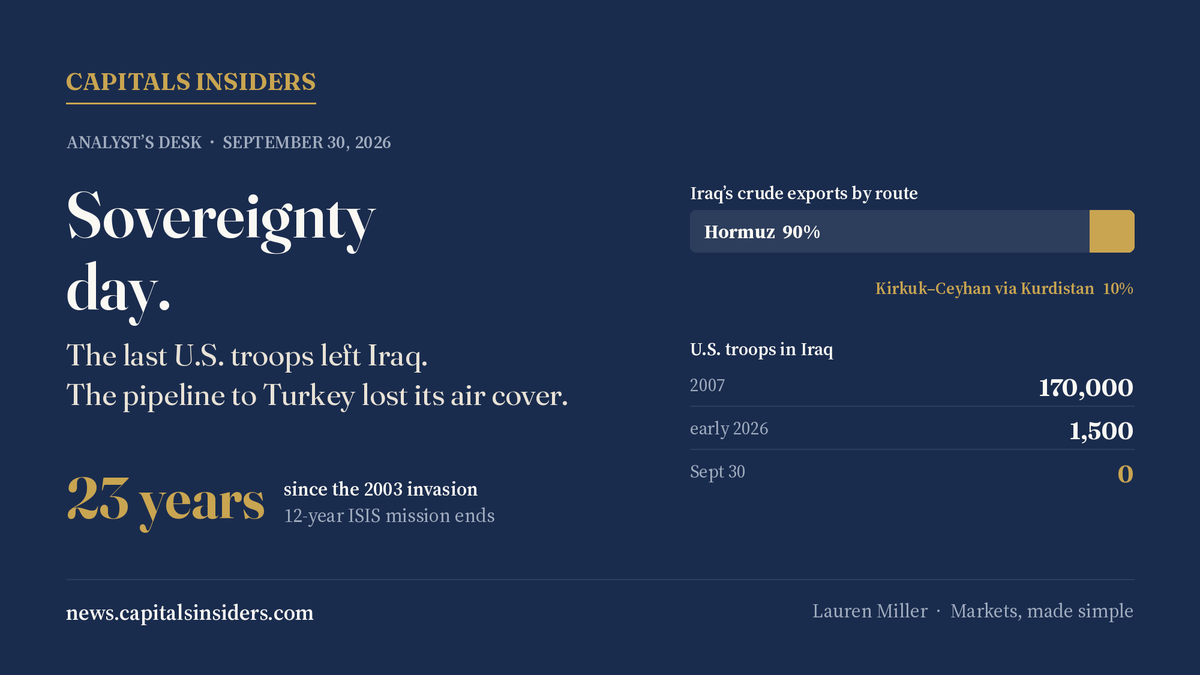
📊 Analyst's Desk Iraq’s sovereignty day — and the pipeline that just lost its air cover 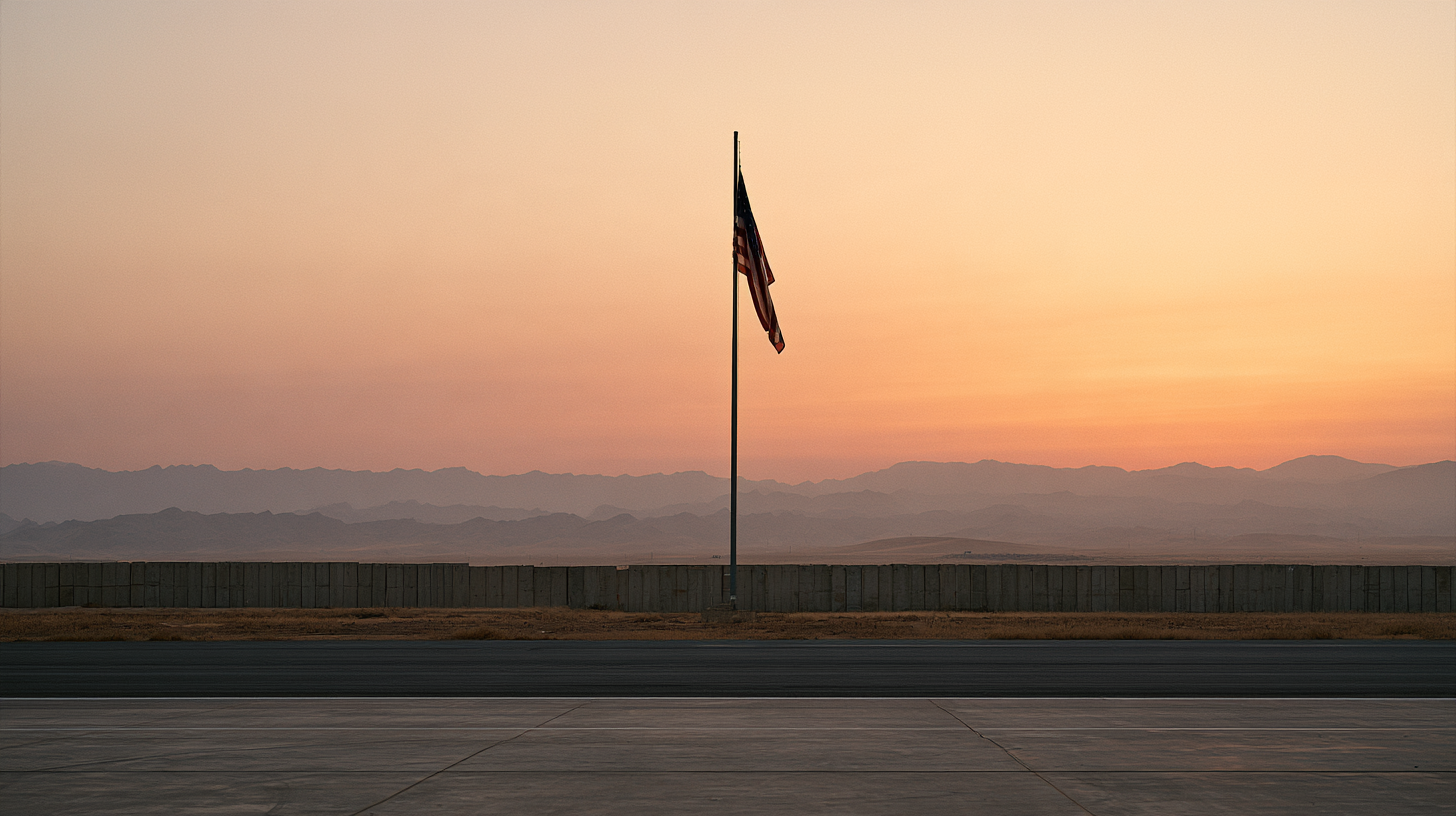 Start with what happened. U.S. Central Command said on Wednesday that its last forces had vacated Erbil Air Base in the Kurdistan Region, ending a 12-year mission against the Islamic State and more than two decades of American military presence that began with the 2003 invasion. At its peak in 2007, the U.S. had 170,000 troops in Iraq. Earlier this year, about 1,500 remained, all in the Kurdish north. The Pentagon described an orderly departure and said it will continue to provide targeted training and intelligence support. Iraq's prime minister declared a national holiday and called Wednesday sovereignty day. For the record, Iraq has held such days before, in 2004, 2009 and 2010. This one is the first with no American troops left to count. “A new phase, one defined by Iraq’s sovereignty.” Prime Minister Ali al-Zaidi at the handover ceremony, September 30 Not everyone is celebrating for the same reason. Officials in the Kurdistan Region have expressed anxiety about the departure, particularly the removal of U.S. air defense systems. Iran-allied militias, meanwhile, have celebrated. Baghdad had originally tied the September 30 deadline to disarming those groups by the same date; the prime minister has since pushed that deadline to June 2027. The withdrawal also comes during a war in which Iran-backed militias have fired on U.S. troops and the U.S. has struck their strongholds. Here is where it gets structurally interesting for markets. Iraq's crude exports have recovered to about 70% of pre-war volumes. According to Vortexa data, 90% of those barrels leave through the Strait of Hormuz on shuttle transfers, helped by Iran turning a blind eye to some shipments. The other 10% flows through a pipeline from Kirkuk across Iraqi Kurdistan to Turkey's Mediterranean port of Ceyhan, the country's only route that does not depend on the strait.
A PIPELINE WITH A HISTORY Exports through the Kirkuk–Ceyhan line, which once carried about 0.5% of global supply, were halted in 2014 after repeated Islamic State attacks. It reopened only after a revenue-sharing deal between Baghdad and the Kurdish regional government, and in March the Kurds briefly withheld cooperation during a dispute over dollar transfers. Its security has always depended on politics as much as on engineering. Read together, these facts tell one story. Iraq's oil income now depends 90% on a strait where Iran holds the leverage, and 10% on a route through the one region that just lost its American air defenses. The mechanism is not about troop numbers; the U.S. presence had already shrunk to a few hundred. It is about who guards the alternative when the main road is contested. For the oil market, the Kurdistan pipeline is small today but strategically outsized, because it is the only Iraqi barrel that Tehran cannot slow down. Neither a new threat nor a smooth transition is guaranteed. | |
💵 Income Desk: Why bank stocks had their worst month since 2023 Many retirees own bank stocks for their dividends, and September has not been kind to them. The S&P 500 financials sector is down –6.3% for the month, on pace for its first monthly decline in four. S&P 500 financials, September –6.3% worst sector this month Last time it was this bad Mar 2023 the month of the regional bank failures The mechanism runs through the bond market. When long-term yields rise, the bonds banks already hold lose market value, and banks have to pay more to keep depositors who can now earn more elsewhere. The comparison with March 2023 is about the pressure, not the outcome: that month's failures were concentrated in a few banks with unusually large bond losses and flighty deposits. For income investors, the question is whether dividends are covered by earnings, which is a company-by-company answer rather than a sector one. | |
🧭 Market Sentiment & Calendar Consumer confidence, September 81.9 vs. 89.2 expected; lowest in over 12 years Expectations index 63.6 –5.9 points from August Wall Street is calm. Main Street is not. Today, Sept. 30 PCE inflation and GDP data; the third quarter ends. Fri, Oct. 2 September jobs report, 8:30 a.m. ET. Oct. 27–28 FOMC meeting. June 2027 Baghdad's new deadline to disarm Iraqi militias. | |
📜 Wisdom of the Street “You can’t predict. You can prepare.” — Howard Marks No one can say what Iraq looks like without American troops. The places where the risk would show up, one strait and one pipeline, are already on the map. | |
Have a good day. — Lauren Miller, Capitals Insiders |